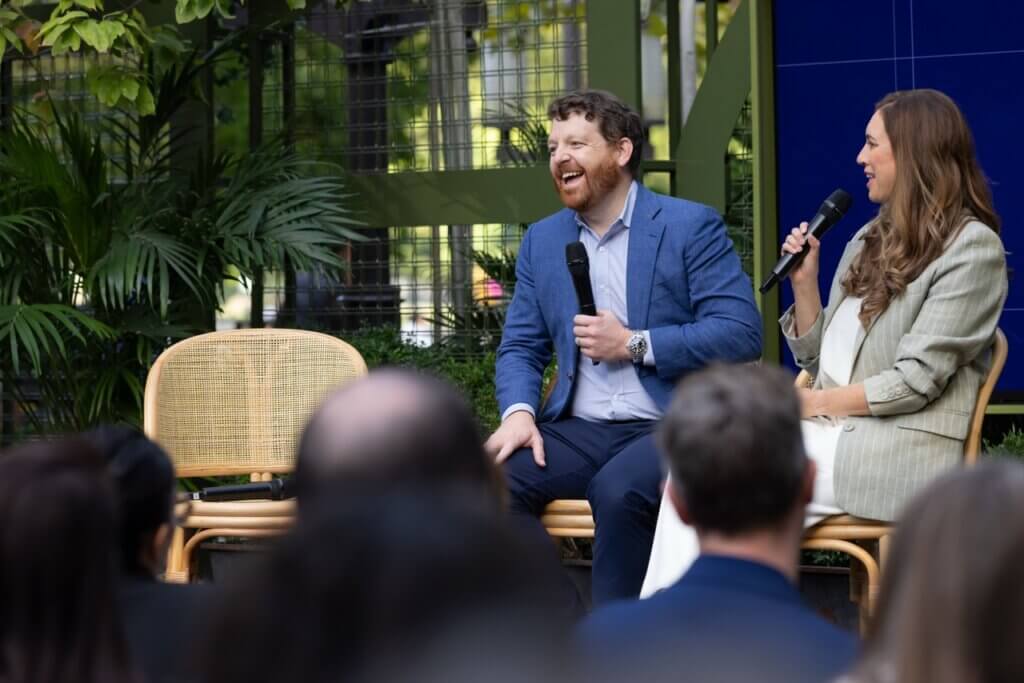
At New York Climate Week 2026, Fervo Energy co-founder and CEO, Tim Latimer, joined Elemental on stage to share lessons from scaling a first-of-a-kind geothermal technology. He shared how he and his team balanced building trust with local communities and working with large corporate customers to super-charge growth.
Elemental first invested in Fervo in 2020, supporting an early pilot in Nevada. This pilot helped attract Google to enter into the world’s first corporate agreement for enhanced geothermal, the first step in a long and fruitful relationship that bolstered Fervo to an IPO earlier this year.
Below is a modified transcript of his conversation with Dawn Lippert, Elemental Impact Founder and CEO at our hosted event Data Centers as a Catalyst for Climate Innovation.
_____
Elemental has been investing in community engagement for more than 15 years, and we’ve seen it go in and out of vogue over the years. When we first invested in Fervo in 2020—largely because of your focus on community impact—what was the reception to that work?
One of the reasons that Fervo was attracted to Elemental to begin with—in addition to the capital, which is always very important—is that there was early alignment on the importance of community engagement and of building projects the right way.
I spent my entire career in energy and infrastructure. I’m also from a very small town in Texas—a town that has the distinction of being the last place in the United States that a utility-scale coal plant was ever built. In 2011, the Sandy Creek coal plant came into town, so I grew up on the rural community side of this community engagement—and that project didn’t do it right.
The nice thing about starting a company is that you can do it your own way. I thought: we’re going to make this a priority from day one. And it’s very hard when you’re a startup. You’re trying to figure out how to keep the capital flowing, how to keep the people happy, how to close deals, how to walk and chew gum at the same time. And then to also make sure that you’re holding yourself to a higher standard—on sustainability, on community outreach, on partnership—is very challenging.
When we got into the Elemental portfolio in 2020, I thought it was fantastic that this was a core part of your model. Allowing startups to not only focus on the critical things like sales and tech maturity, but recognizing that doing community engagement the right way is as critical to success as the other parts of the business.
When we went into Beaver County, Utah, we wanted to do it the right way. We had a meeting with the mayor recently where he said that companies usually show up for the first meeting saying: “We want to do this in your town, and this is what we need from you.” But with Fervo, in the first town hall meeting—which we held two years before we ever broke ground on the project—we asked “What do you need from us?”
What did you learn when you asked that town hall question and how did it inform your business strategy in Beaver County and beyond?
One thing we heard is that a large corporate agriculture firm had pulled out of the town recently, and it left a lot of people unemployed. So workforce development was a priority from day one.
One of the things we partnered with Elemental on was creating an apprenticeship program for geothermal jobs at the local university. We have now hired dozens of people in that community and we are going to continue to hire. Those are the kinds of things that lead to long-term partnership.
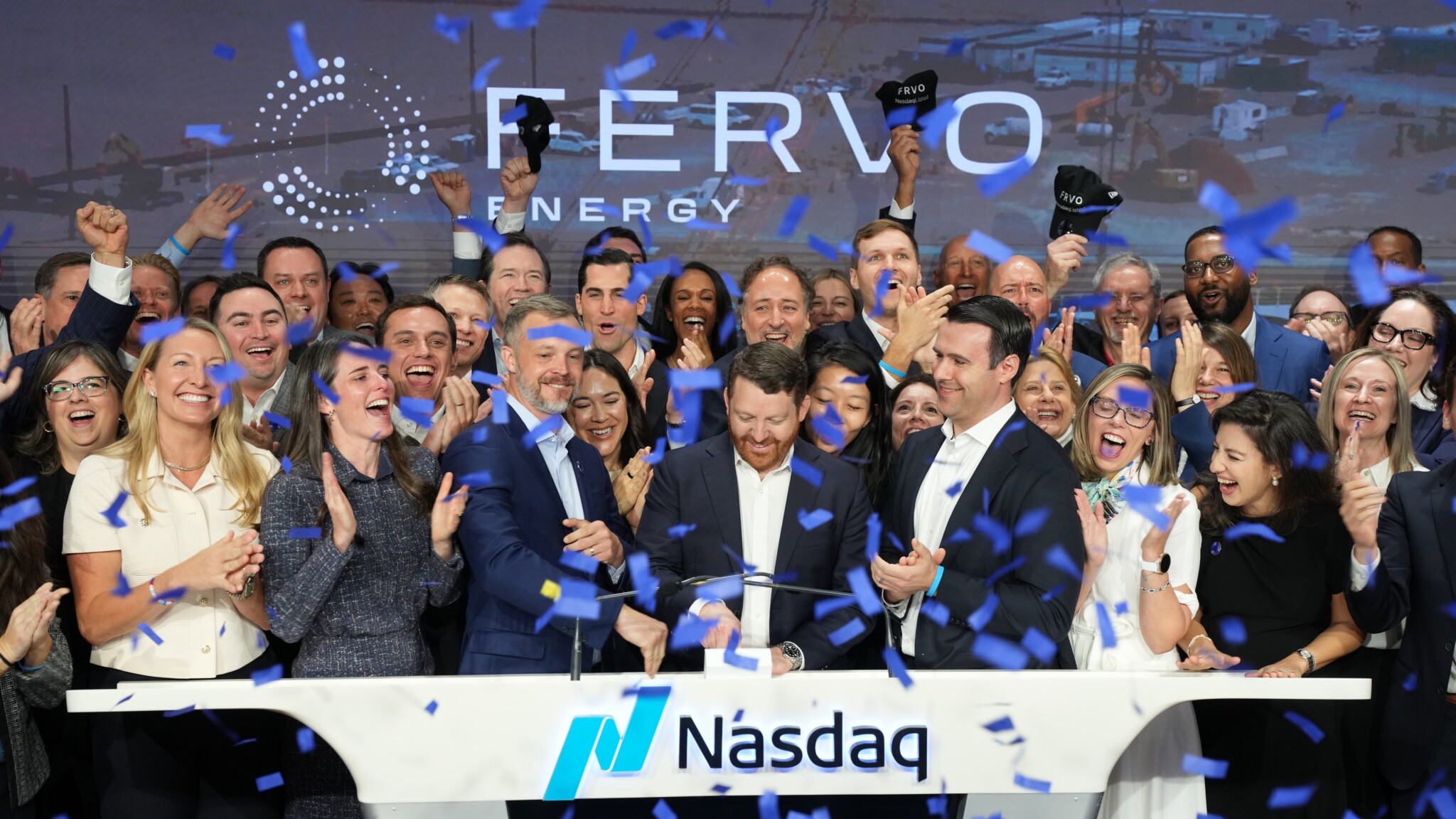
And when Fervo did our IPO in New York a few months ago, we had a couple guests of honor. First, my parents, which was fun. But we also invited some of the local folks from Beaver County. One of them was the county commissioner, and a pillar of the community that we work in, whose land is directly adjacent to our site. He came all the way to New York. He told us that “the only thing that was going to get me to New York was celebrating something like this with y’all.”
The message we are trying to get out there is that community engagement is not a nice to have, and it’s not just for altruism. It is a necessity of modern infrastructure development, and people need to treat it as a top priority.
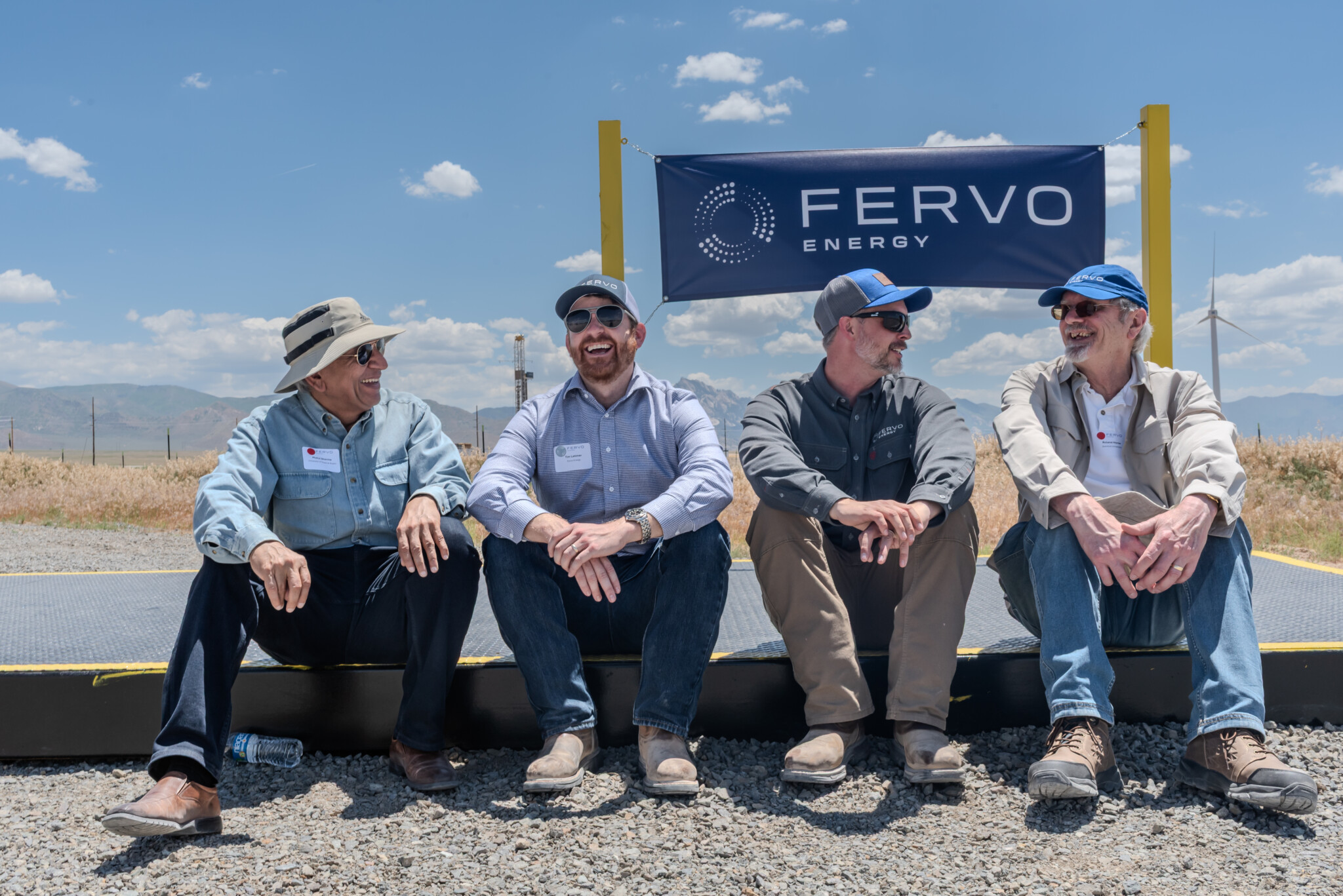
“The message we are trying to get out there is that community engagement is not a nice to have, and it’s not just for altruism. It is a necessity of modern infrastructure development, and people need to treat it as a top priority.”
There is a growing challenge around siting and community acceptance. What does it take to build trust with the communities hosting these projects?
Sometimes developers approach this like, “we don’t want to invite protests, we don’t want to invite skepticism, so let’s do this as stealthily as possible.” And since I grew up in a small town, I know how silly of an idea that is. You are not going to bring in truck traffic and people from out of town to eat at the local diner without everyone instantly knowing exactly what you’re doing. You just need to be transparent from the beginning.
People see the political backlash that is coming with digital infrastructure all over the country and realize that we have done these communities a disservice by not building projects in the right way. Communities want to hear that, if you’re going to come in, you’re going to provide community benefits, you’re going to be a good partner, but also consider things like emissions and water use. They want to know that you’re working on solutions.
Large technology companies can play a unique role as early customers for emerging technologies. What advice do you have for entrepreneurs navigating those relationships and turning an initial pilot into something much bigger?
Persistence helps. It also helps to remember that these are large organizations. They’re making procurement decisions about a mission critical part of their business—the data centers. If they don’t have the right reliability, they don’t have the right uptime, they don’t come online on time, that’s a big problem. So you have to build a lot of trust that your solution is going to work.
Google was our first-ever customer. It’s a relationship that goes back many years. And when we were first starting to try to convince people to take a bet on enhanced geothermal, a lot of smaller power buyers passed on it. And I’ll make a short distinction: it wasn’t because they didn’t believe our technology would work. It’s because they didn’t know that the technology would work. They weren’t skeptical, but if you’re a smaller organization, you don’t have much of a balance sheet. You’re risk averse. It’s actually very hard to take a bet on something new. Utilities, municipalities, and community choice aggregators—these are all people that can play a big role in buying power, but a lot of times, they’re not going to be the ones that are incentivized or situated to take that first step.
“You start small, you build trust, and you use that to get bigger.”
Working with an organization like Google—who has the balance sheet, and the resources, and the sophistication to sift through these things—is really important. Google had the resources to do things like hire independent engineers to come and evaluate all of Fervo’s projects—almost as if they were underwriting an investment, not just as a customer. That is powerful. It creates a new class of buyers who are willing to take the risk on new technologies.
The other thing is, you start small, you build trust, and you use that to get bigger. We have gone through this progression with Google from a 3 megawatt pilot project in Nevada, to a 115 megawatt project. And now we just announced a 396 megawatt project, with the opportunity to stand up to a gigawatt. Take advantage of the fact that these companies have the motivation and financial resources to take the bet on your technology, and then turn little wins into big wins.
Are there any areas where you have different interests from your customers? If so, how does that work?
That’s where trust and relationship matters. But I would also say that startups are small. And you’re dealing with the largest companies in the world, so you have to understand that dynamic. It’s no different from any other sale or negotiation because you have to figure out where your unique leverage is when you’re negotiating with a company that is 10,000 times your size.
One of the things that is really powerful right now is that all these tech companies are very hungry for sustainability and affordability solutions so they can tell the market, policymakers, and local stakeholders that they’re working on it. This is a unique moment of leverage where startups are valued, even though there’s this imbalance in size, because they really, really need your solution to work, so that they can get the social license to build these facilities.
That creates a lot of opportunity for startups who can execute right and execute quickly to crack into this market and really be on a level playing field with a customer or partner who otherwise is bigger than you.
“This is a unique moment of leverage where startups are valued, even though there’s this imbalance in size, because they really, really need your solution to work, so that they can get the social license to build these facilities.”
 Sign up for our monthly newsletter