
The theme of Elemental Interactive 2026 was “Be Bold and Build.” Many stories celebrated success—but one stood apart for what happened when it didn’t.
At FreeWire’s peak, Arcady had momentum that many founders spend years chasing. The company had recently raised a $50 million Series C. In 2022, it brought in another $150 million and was scaling into tens of millions of dollars in revenue. 18 months later, it was filing for bankruptcy.
This conversation brought into focus the power of becoming antifragile—growing stronger under pressure, adapting through stress, and carrying hard-won lessons forward. It is also a telling story about what endures: relationships, purpose, and the courage to begin again.
We are grateful to Arcady for being vulnerable to share not just the highs, but also the lessons learned from the lows.
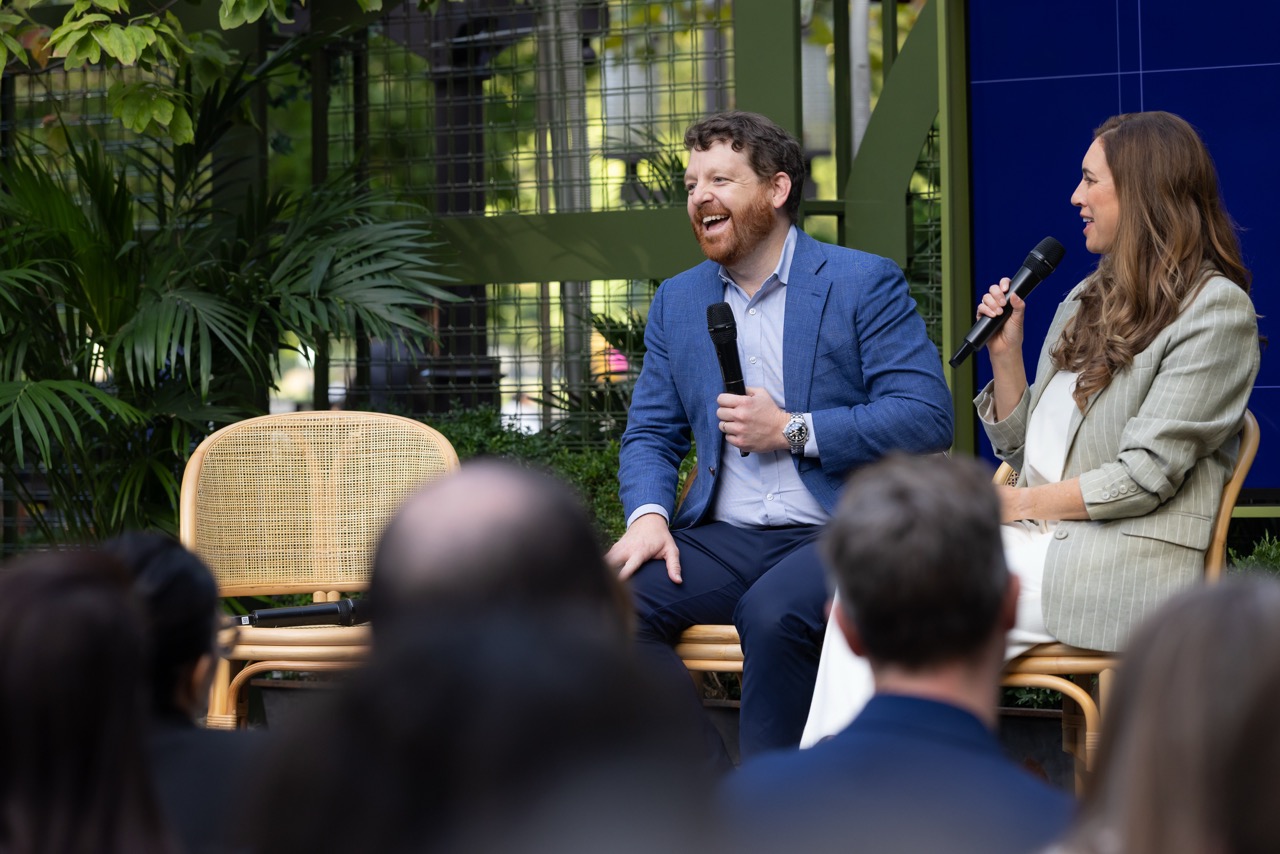
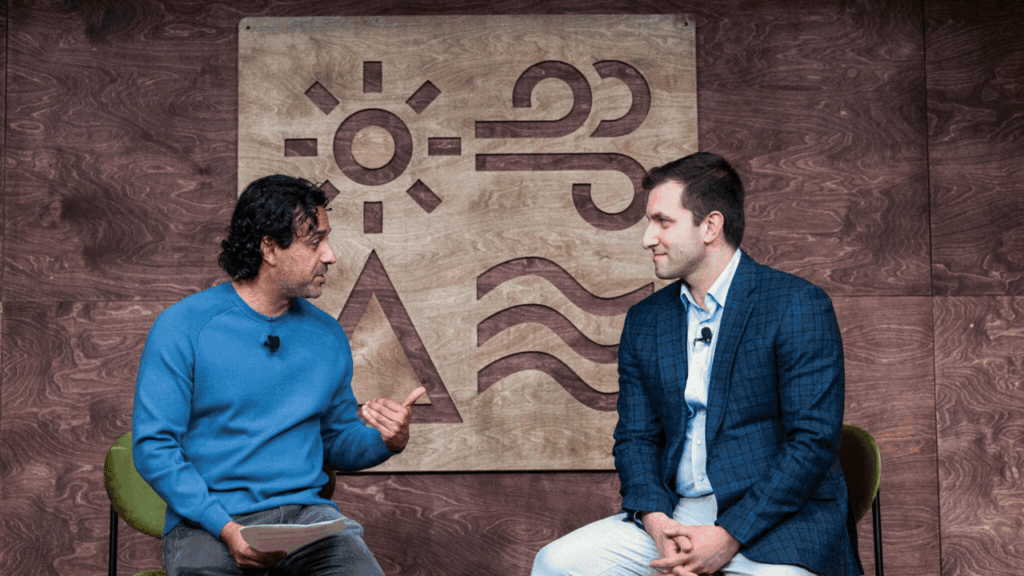
Naveen Sikka, founder and CEO of Terviva (an Elemental Portfolio Company from 2013) and Elemental board member, interviewed Arcady Sosinov, CEO of Tritium and former founder and CEO of FreeWire Technologies (a 2014 Elemental investment), during Interactive.
This conversation has been lightly edited from its original for length and clarity.
How did FreeWire begin and what did those early years look like?
The story of FreeWire is really the story of my entrepreneurial journey. It started in 2014, when I was in business school. FreeWire began as a class project. We wanted to deploy EV charging at scale without relying on grid upgrades.
The first iteration was a service where we provided mobile charging robots to corporate campuses around Silicon Valley. Imagine that moment: it was an outlandish idea, a very immature technology, a very small customer base, and a very niche market. And yet, we got a little bit of traction.
But even with that traction, it was hard. I realized I needed support in doing what I was doing. I was lucky enough to find Elemental, who didn’t say, “This is an outlandish idea.” They said, “Actually, this may not be so outlandish—and we might even have a customer who wants to try it.” That customer was Hawaiian Electric.
A year later, I had a network of builders, a little bit of capital from Elemental, and a pilot program in the ground with Hawaiian Electric that I could point to and say, “This is real.” More than that, I didn’t feel so alone anymore. That gave me the motivation to keep going.
I had a network of builders, a little bit of capital from Elemental, and a pilot program in the ground with Hawaiian Electric that I could point to and say, “This is real.”
Those early FreeWire days lasted another six years before I really hit product-market fit. Those years were full of trying and failing, discovery, and experimentation. Looking back, even though they were tough, they were some of the best years of my entrepreneurial journey. I feel bittersweet sometimes that I may never get those years again.
Let’s fast forward. You’ve now got product market fit. You’re generating $10’s of millions of revenue. You’re building very fast. What changed once the company started to scale?
2020 was an interesting year for us. Our customer base disappeared almost overnight. At that time, we were serving corporate campuses, and of course those campuses were suddenly empty. So we had to pivot hard. We moved into battery-integrated charging for gas stations and convenience stores. The flywheel started spinning. Revenue started climbing. But so did expectations.
We realized pretty quickly that this could be a capital-intensive business, and that’s when capital formation took center stage. We raised $50 million in 2020, and then in 2022 we were convinced by the people around us to go public through a SPAC.
Looking back, we now know that was musical chairs for climate tech. But imagine yourself in that moment. Your board, your investors, your colleagues—everyone is looking around the industry and asking, “Why aren’t we playing that game?”
That pressure was real. I felt it. And I went all in. We spent millions in legal fees. It felt like we were off to the races.
But that’s when something shifted in the expectations of me as a CEO.
In hindsight, I can see that the focus moved away from the fundamentals of the business—customer acquisition cost, gross margin, all the things that actually matter—and toward round size and valuation. That became the yardstick.
In hindsight, I can see that the focus moved away from the fundamentals of the business—customer acquisition cost, gross margin, all the things that actually matter—and toward round size and valuation.
At every board meeting, every investor event, every conversation, the question was, “How much did you raise? At what valuation? What’s the next round?” That’s what disconnected me from the fundamentals of the business.
SPAC: A quick explainer
A SPAC, or special purpose acquisition company, is a shell company that raises money in public markets and then merges with a private company, taking that company public without a traditional IPO. For a period, SPACs were seen as a faster, cheaper path to the public markets. But for many companies, they also brought pressure, cost, and expectations that proved difficult to sustain once markets turned. Further, the relatively lower amount of scrutiny that came with SPACs meant that some companies who went public via this route significantly underperformed, reducing overall confidence in the category as a whole.
When did it become clear that things were starting to unravel?
Eventually, the SPAC bubble started deflating, and I made the hard decision to pull out of that process. But a month later, the Biden administration signed the Inflation Reduction Act into law, and we thought we were off to the races again.
Within about a month, I raised that $150 million round. Revenue was growing. We had this pipeline of federally funded projects, tax credits, incentives, manufacturing incentives—all of it that we were counting on to help build the business. So the first half of 2023 was glorious. But then the second half changed.
The promise of the Inflation Reduction Act didn’t materialize as quickly as we expected. “Transitory inflation” turned into real inflation. Every project we were working on was based on an interest rate, and all of a sudden interest rates were climbing. Our projects could no longer pencil.
At the same time, our customer base—oil and gas—started pulling away from electrification and EV charging. Revenue growth started to turn negative. And that’s when the capital stack—the same capital stack I had been so proud of—started turning against me.
That’s when the capital stack—the same capital stack I had been so proud of—started turning against me.
As part of that previous raise, we had taken on about $50 million in convertible debt, and there were covenants attached to it. We breached those covenants. When we took that money, we were told it would be the last money we’d ever need. We were told it would be there for us. It was pitched as patient capital. And then that “patient” investor came back and said: we’re going to call the debt unless you sell the company. We didn’t have that money in the bank.
The rest of the story goes more or less how you’d expect. We made a couple of attempts to sell the company to private equity. Those attempts failed. Eventually, we had to give up the business for essentially nothing to someone who was willing to come in, restructure it, and take on the debt.
It was a journey I always want to remember, but an outcome I will never forget.
Looking back now, what do you think could have been done differently to have changed the outcome?
In hindsight, I didn’t lose FreeWire when the economy turned. That was just the outcome. I lost it when I started focusing on round size and valuation instead of the fundamentals of the business.
I realize now that growth at all costs is not a strategy. Any company you see that went through that and made it to the other side—that’s survivorship bias. Most companies don’t. And it’s not the right way to build. You have to focus on the fundamentals. You can’t let yourself get carried away by what’s happening around you.
I realize now that growth at all costs is not a strategy.
The other lesson is that you have to be very careful about the kind of capital you bring on, and when. At the end of the day, debt holders do not have an obligation to the company or to your shareholders. When things turn, they will do everything in their power to protect their downside. And for a startup, the moment you start operating from a place of protecting downside, that’s the end.
How did you find your way forward?
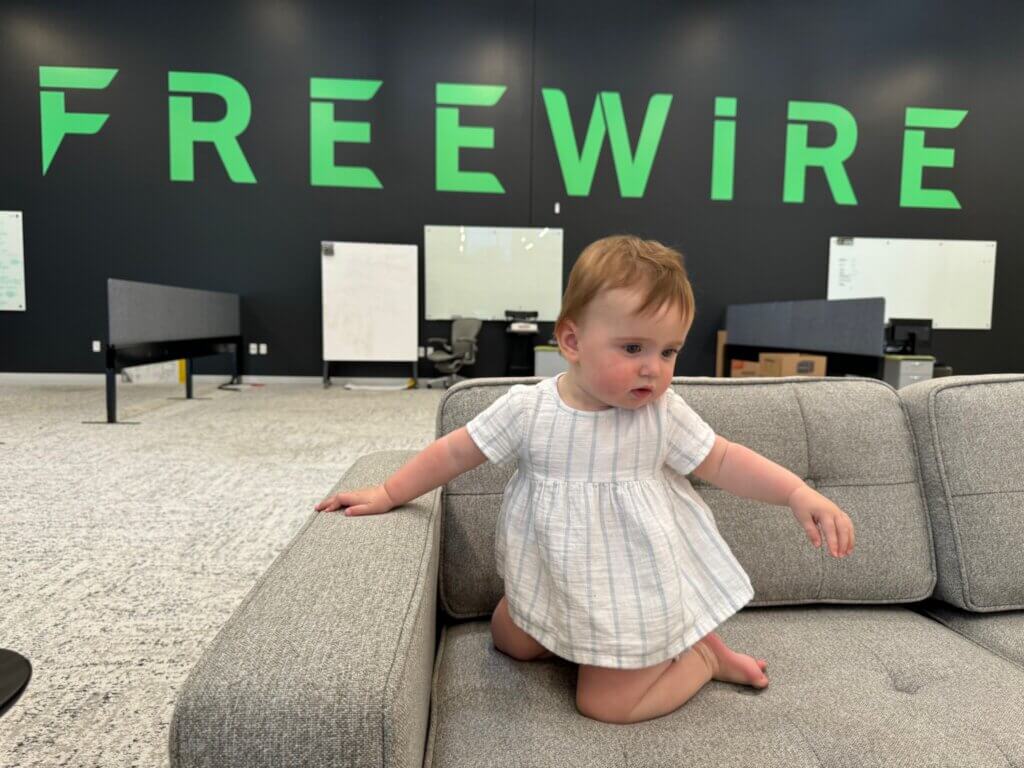
What really kept me going was something very personal. As the business was spiraling, my wife and I had just had our first child. The last picture I took at FreeWire was of my daughter. She was about nine months old at the time. That’s when I realized why I had done this in the first place.
I didn’t do it just to create something and see how it goes. I didn’t get into this space because I thought it would be fun. I entered this industry because I wanted to make an impact.
Now I have two daughters. They are both the reason I want to make that impact. So I jumped right back in. It took some soul-searching, but I found a company where I could focus on the fundamentals, and that’s what I do now.
Funny enough, at Tritium we have a really close partnership with Hawaiian Electric—the same relationship that began back in those early Elemental days. We’re the charging provider for the vast majority of the islands in Hawaii. I’m really happy that I get to connect those two parts of my journey.
And one of the biggest things I take away from all of this is that even when a company doesn’t work out, the relationships can last forever. The relationships I formed through Elemental, through Hawaiian Electric, through people like Naveen—those stayed with me.
And I’m just grateful to be able to tell the story.
Even when a company doesn’t work out, the relationships can last forever.
 Sign up for our monthly newsletter