
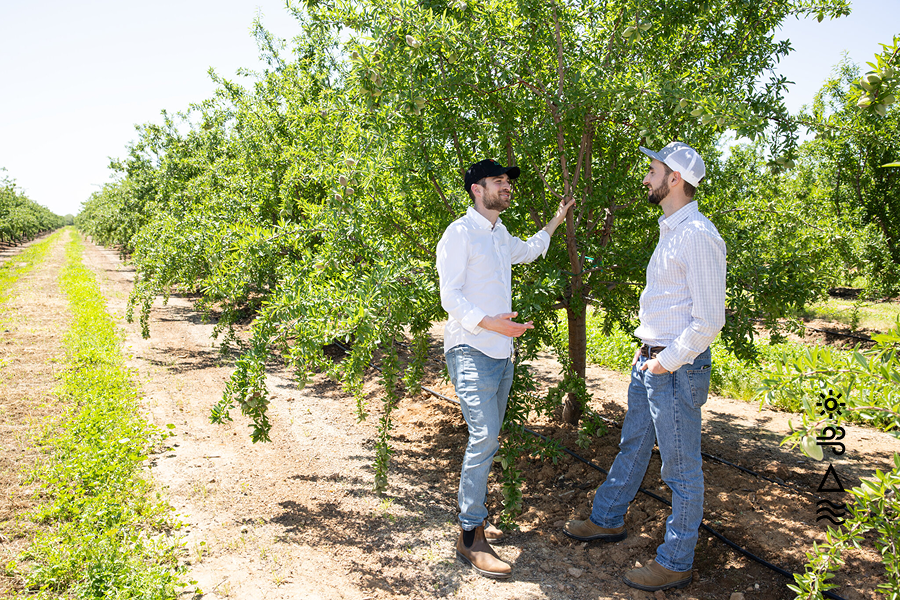
In California’s Central Valley, where one quarter of the nation’s food is grown, a quiet revolution is taking shape. Amid the rows of almond orchards and expansive farmland, Nitricity is building a first-of-its-kind (FOAK) fertilizer factory to tackle one of agriculture’s most foundational challenges: nitrogen fertilizer—an essential ingredient crops need to grow.
In the U.S., more than half of the nitrogen fertilizer used on farms is imported, leaving American agriculture vulnerable to global supply chain disruptions. Nitricity’s model is a sustainable, organic alternative that brings production close to home and strengthens farmers’ bottom lines, providing economic, community, and environmental benefits. It’s a local solution to a global problem—and one that could reshape how the world feeds itself.
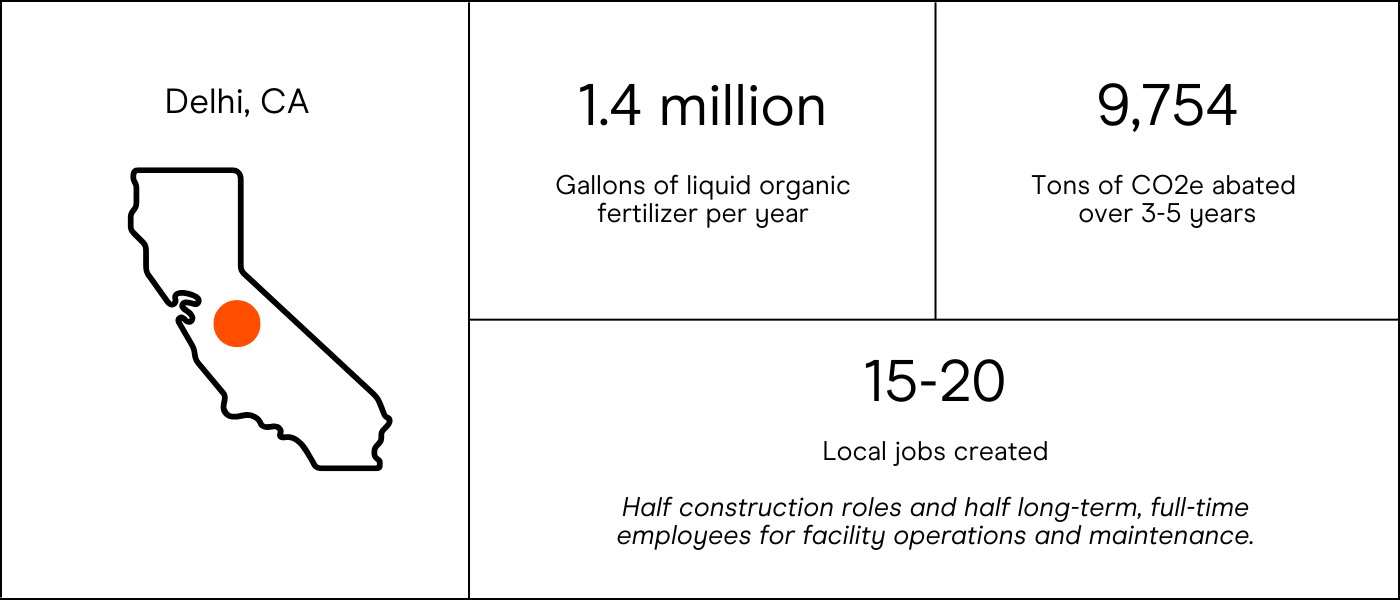
The new facility in Delhi, CA is expected to deliver:
The Opportunity: turning pilot traction into global impact
Fertilizer production and distribution haven’t kept pace with rising global demand. Most of the world’s supply is manufactured in fossil-fuel-intensive factories—primarily in China and Russia—then transported across continents to reach farms. This outdated model also comes at a significant environmental cost. From production to shipping to on-farm application, nitrogen fertilizer is responsible for roughly 5% of global greenhouse gas (GHG) emissions—making it one of the largest sources of pollution in agriculture.
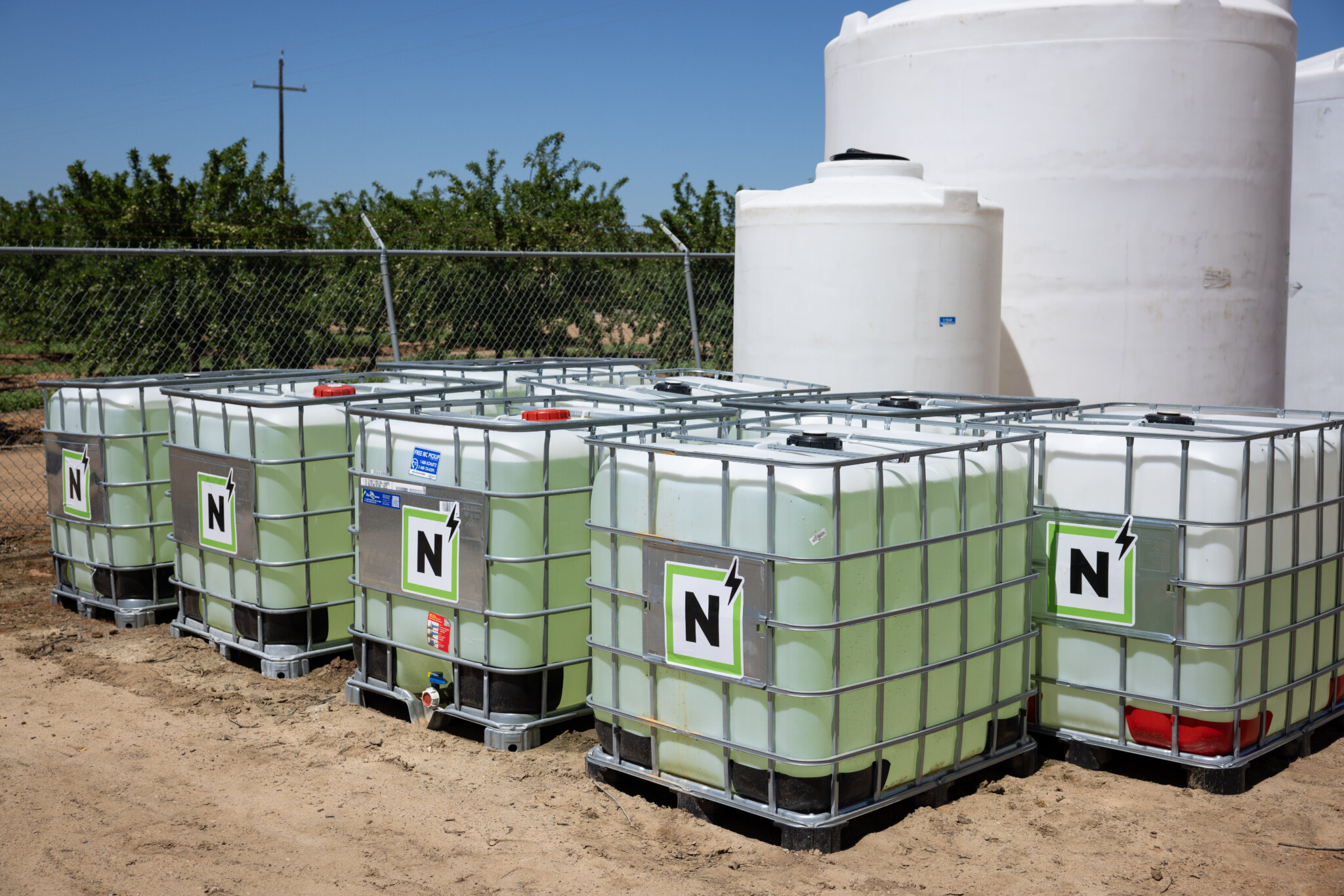
That’s where Nitricity’s breakthrough solution comes in. The company makes cost-competitive, organic nitrogen fertilizer close to where it’s needed—in local facilities across America’s farming heartland. Their unique process uses recycled almond shells and renewable power to decrease the carbon intensity of fertilizer production by 43% over traditional methods, while increasing crop yield by 23%.
“The market is currently structured such that geopolitics on one side of the planet can lead to hundreds of millions of people going hungry on the other side. To me, that’s an unacceptable market structure.” – Nicolas Pinkowski, Nitricity Co-Founder and CEO
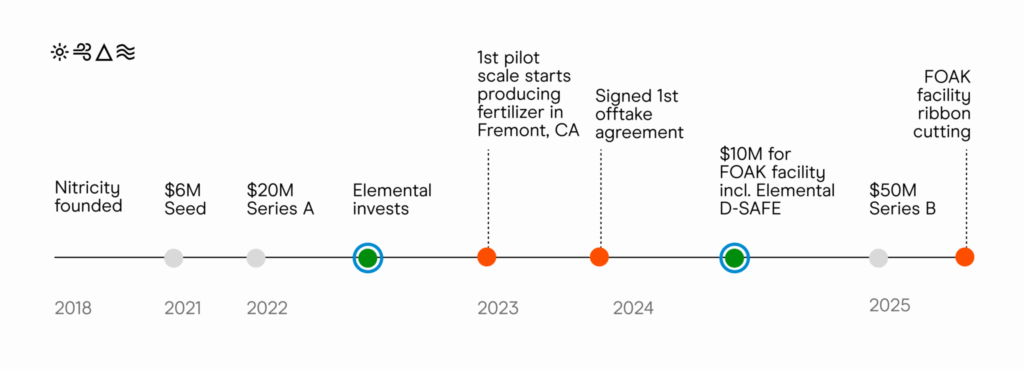
When Elemental first invested in Nitricity in 2022, they had just raised a $20M Series A and were operating a 6kW pilot out of a small lab-scale facility. At the helm is CEO and Co-Founder Nicolas Pinkowski, who had begun developing the technology alongside co-founders Joshua McEnaney and Jay Schwalbe after crossing paths at Stanford University in 2018. Over the years, they worked to transform it from a lab innovation into a scalable solution for farmers.
Nitricity stood out because of the low adoption risk for farmers and significant enthusiasm from early customers. Our hypothesis was that, with the right kind of catalytic capital and hands-on coaching, Nitricity had the potential to scale their regional production model to commercialize clean, localized fertilizer production technology that could significantly reduce pollution, improve global food security, and onshore American fertilizer supply chains.
Elemental’s Nonprofit Model: doubling down where traditional capital is missing
Our initial investment enabled the company to expand its first production facility in Fremont, CA, increasing their capacity by 10x and supporting successful field trials on almond orchards with Olam Food Ingredients and the Madera-Chowchilla Resource Conservation District. This facility was a proof point for Nitricity—allowing them to work through real-life challenges like optimizing almond shell processing and getting familiar with the day-to-day challenges of running a factory, from commissioning and stabilizing equipment to coordinating plant operations, refining product formulas, and navigating city permitting.
With nearly a year of operations under their belt in Fremont and the green light from USDA to certify its fertilizer as organic, Nitricity was ready to increase its capacity 100x by building a larger, $10M FOAK manufacturing plant in Delhi, CA. Now the challenge was financing the plant. With traditional financiers passing due to scale-up risk, the project needed flexible, risk-tolerant capital. Elemental’s nonprofit investing model—and our existing partnership with Nitricity—enabled us to evaluate the opportunity holistically and step in with catalytic support to help bridge the gap.
To help make the Delhi facility possible, Elemental deployed its Development-SAFE (D-SAFE)—an innovative structure that can unlock capital for FOAK projects. Our $2M commitment directly catalyzed $3.6M, representing 44% of the project’s capital stack, helping pave the way for Nitricity’s $50M Series B, led by World Fund.
“The D-SAFE gave us the early momentum we needed to get our first commercial facility off the ground and unlock our Series B round. The flexibility built into the structure—especially the option to repay—also created room on our cap table to expand employee stock options and invest in our team. There wasn’t another good way to do this. Elemental’s flexible financing made the difference.” – Nicolas Pinkowski, Nitricity Co-Founder and CEO
Nitricity has already repaid the D-SAFE, allowing Elemental to recycle that capital into future projects. Because Elemental chose not to convert the D-SAFE into equity, those shares were reallocated to Nitricity’s Employee Stock Option Plan—giving the company more room to recruit, reward, and retain top talent. It’s a compelling example of how Elemental’s nonprofit model delivers catalytic capital with lasting impact across company growth, workforce, and long-term financing – delivering a win-win for the company and the investor.
In addition to direct funding, Elemental is providing hands-on support across several strategic areas to help Nitricity scale:

- Stakeholder Engagement: Guidance on partnering with local leaders and support in hosting community events like their first-ever community Field Day.
- Policy & Regulatory: Support on public affairs and regulatory strategy, including preparation for a hearing on local permitting.
- Workforce: Consulting on relationship building with local academic institutions to produce internships, hiring strategies, and community-based workforce engagement.
- Storytelling: Drafting press materials and shaping messaging for public milestones like their Series B announcement and Delhi groundbreaking event.
Through our work on these focus areas, Elemental has supported Nitricity on a series of foundational deliverables including securing a three-month loan extension from Silicon Valley Bank at a critical moment and support in strengthening a previously awarded USDA Fertilizer Production Expansion Program grant. Additionally, we worked closely with their team to prepare for a hearing on permitting in a local jurisdiction, and leaned in to help coordinate and amplify their first-ever community Field Day event. The Field Day included an educational presentation from Nitricity on effective sustainable fertilizer application and a tour through almond orchards using Nitricity’s organic product. Also, by attending the event, local growers were able to receive Certified Crop Advisors (CCA) credits, a requirement to maintain their Advisor certification.
Events like these are invaluable in creating space for local growers, industry leaders, and stakeholders to connect directly with Nitricity’s team and strengthen relationships with the Central Valley community.
Scaling Up: a new era of fertilizer production
Nitricity’s Delhi, CA facility is designed to validate the performance and cost competitiveness of its technology at commercial scale—producing 1.4 million gallons of liquid organic fertilizer per year, enough to grow an estimated 2 billion pounds of food and cover approximately 5,000 acres. With construction beginning in 2025 and full-scale production set to launch early the following year, the plant’s full production capacity is already sold out through 2028 under binding offtake agreements with local organic growers.
This 1 MW facility will be a critical milestone on the path to Nitricity’s long-term goal: a 100 MW plant capable of mitigating 24,700 tons of CO₂e annually—the equivalent of taking nearly 5,000 gas-powered cars off the road each year.
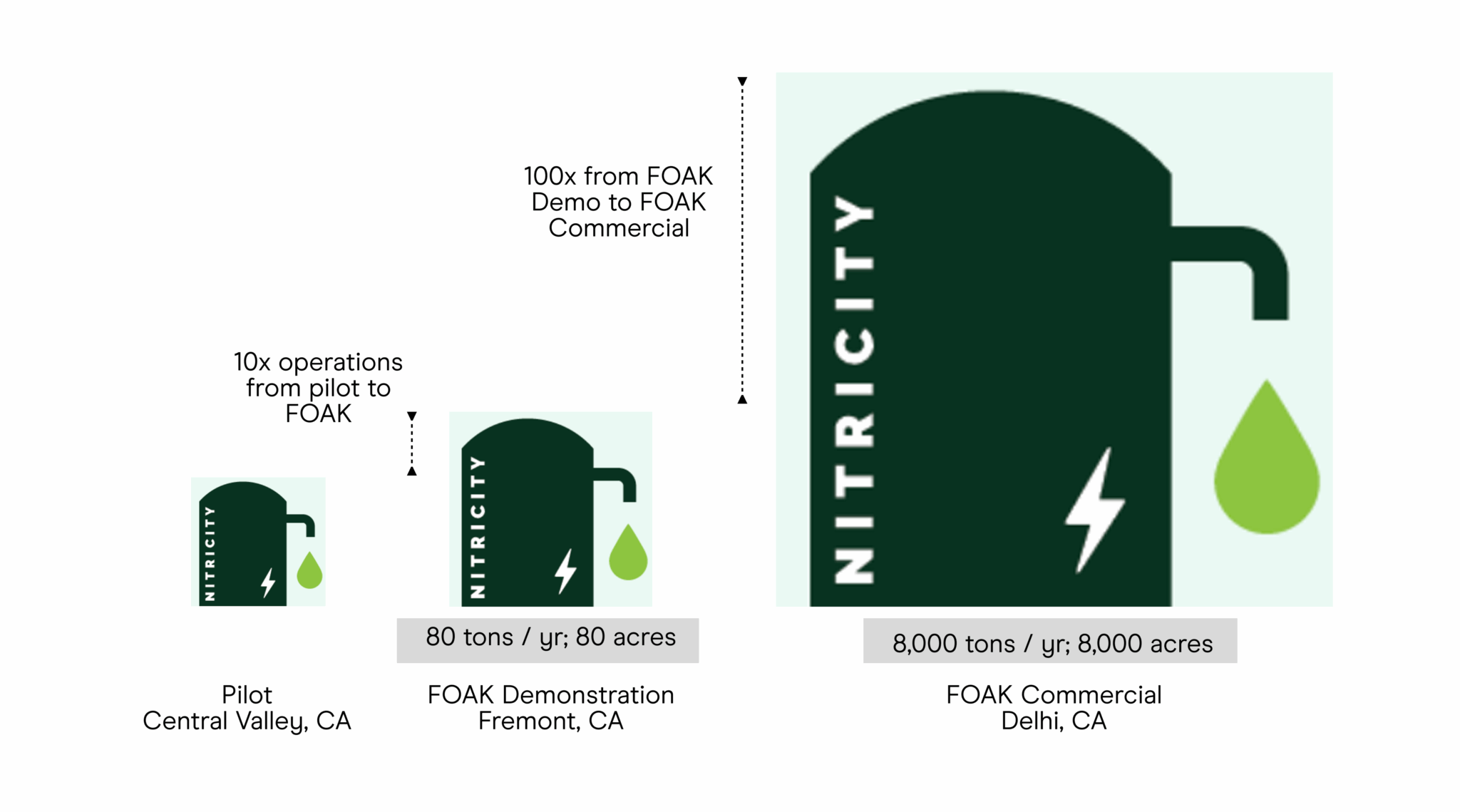
But Delhi is just the beginning. With this first commercial facility, Nitricity is proving out its model at full scale—demonstrating that its technology, economics, and operations work in the real world. Now, the path to bankability is clear: replicate what’s already working. Each new facility Nitricity brings online advances its vision of a network of low-carbon fertilizer facilities, co-located with farms to reduce pollution, cut costs, and improve resilience.
The road ahead is ambitious—but Nitricity’s progress to date shows that a cleaner, localized fertilizer future isn’t just possible—it’s already underway.
 Sign up for our monthly newsletter